

If you just searched “deck contractors near me,” you’re probably somewhere between “we should really do this” and “who do we actually call.” That’s normal — a deck is a big enough purchase that most Springfield homeowners want to compare a couple of options before picking up the phone. This guide covers what actually separates one deck contractor from the next: real cost factors, a realistic timeline, the vetting questions worth asking, the one Central Illinois building detail most national advice skips, and what to watch for in a quote that looks too good to be true.
On this page:
- How much do deck contractors near you actually charge?
- How long does it take to build a deck?
- Deck contractors near me: what to ask before you hire
- Do you need a permit to build a deck in Springfield, IL?
- Why frost-line depth matters for a Central Illinois deck
- Wood or composite: a full comparison
- Red flags when comparing deck quotes
- A simple way to compare two deck quotes side by side
- Common questions about finding deck contractors near you
- What working with a local deck builder actually looks like
- Caring for your new deck year-round
- Why Springfield homeowners choose JDB Home Solutions
- Getting started
How Much Do Deck Contractors Near You Actually Charge?
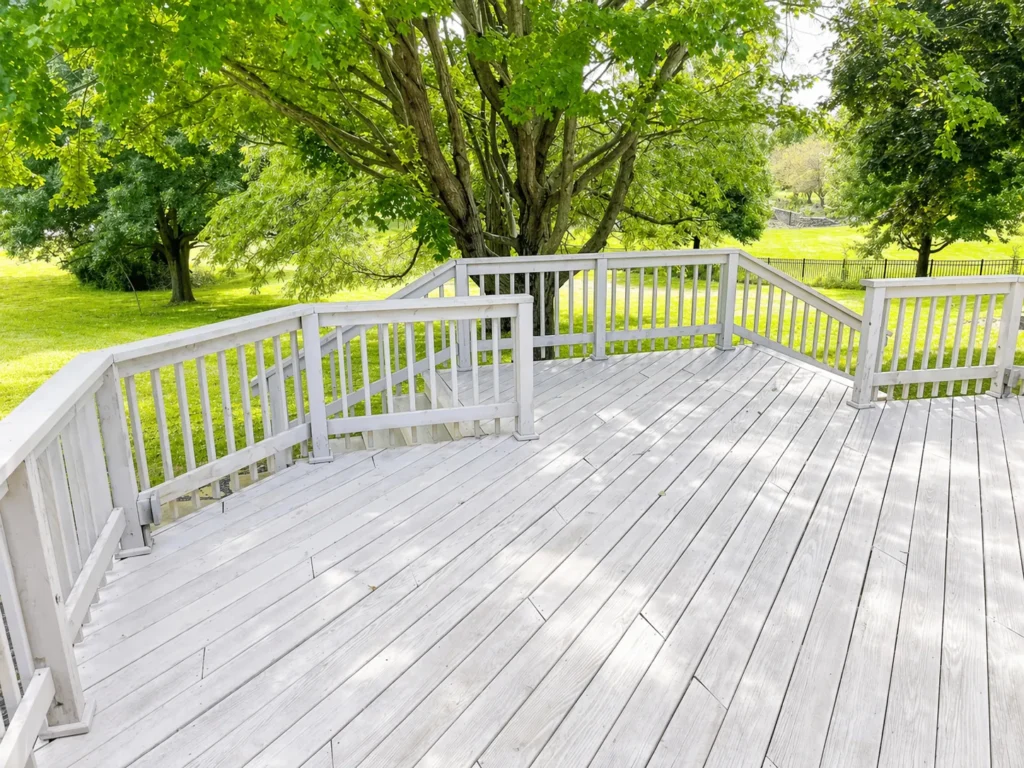
Most local deck contractors won’t — and shouldn’t — quote a firm price without seeing your yard first. Cost depends on several real factors: square footage, material choice (pressure-treated wood versus composite), how much grading or leveling the site needs, how many footings the design requires, whether stairs and railings are part of the build, and any add-ons like a pergola or built-in bench.
What you can control is getting a real written estimate instead of a verbal ballpark, so the number you’re quoted is the number you actually pay, not the number before “change orders” start showing up. A detailed estimate should break out materials and labor separately, list the footing count and depth, and note who’s responsible for pulling the permit.
How Long Does It Take to Build a Deck?
Most standard decks in the Springfield area take 3 to 7 days to build once the design and permits are finalized, with daily site cleanup along the way. Multi-level decks, pergola combinations, or screened-in builds run longer, since each adds its own framing, footing, or enclosure work.
Weather is the other real variable in Central Illinois — a rainy stretch can push a build back a few days, and a contractor who won’t give you a realistic day-count up front usually hasn’t thought through the footing and inspection schedule closely enough to know.
Deck Contractors Near Me: What to Ask Before You Hire
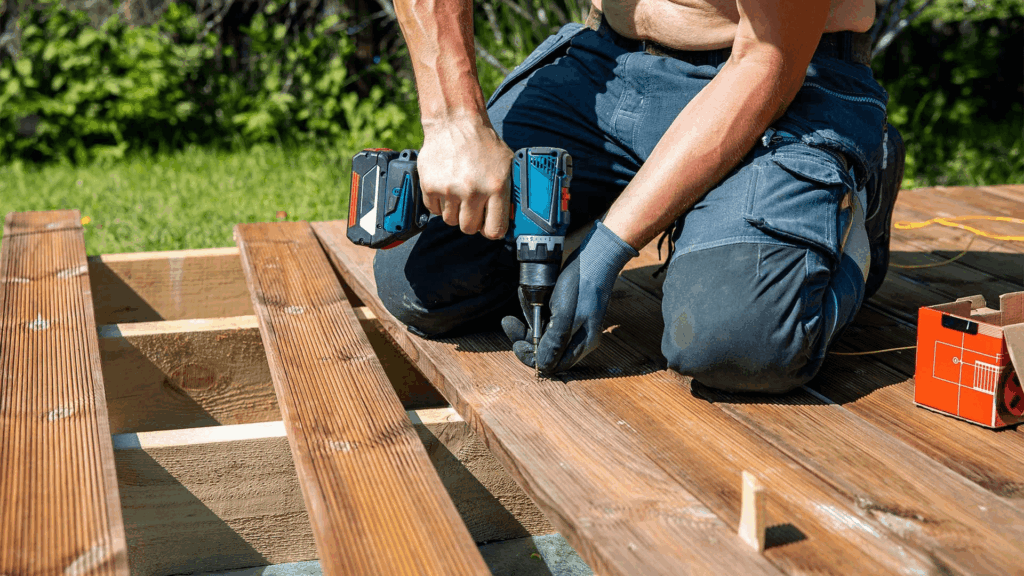
A handful of questions separate a real local contractor from a subcontracted crew working under someone else’s name:
- Is the company licensed and insured? Ask to see it, not just hear “yes.”
- Who’s actually on site during the build? On a lot of jobs, the person who quotes the work and the person who builds it aren’t the same person.
- Will the footings meet Central Illinois’ frost-line depth requirement? More on why this matters below.
- Is the estimate written, with materials and scope spelled out? A verbal number is not a quote.
- Who pulls the permit — you or them? A contractor who skips this step is passing the risk (and the paperwork) to you.
- What’s covered under warranty, and for how long? Composite decking in particular should carry a real fade-and-stain warranty from the manufacturer, not just the installer’s word.
- How fast do they respond, and who do you call after the build if something needs a follow-up?
When people search “deck contractors near me,” they’re usually trying to answer these same questions for two or three companies at once. Asking them upfront, before you request quotes, makes the answers easy to compare side by side instead of buried in fine print later.
Do You Need a Permit to Build a Deck in Springfield, IL?
In most Illinois municipalities, including Springfield, an attached deck above a certain height or size requires a building permit, and often a separate electrical permit if lighting or outlets are involved. Permit requirements typically cover footing depth, railing height, stair geometry, and ledger-board attachment to the house — the structural details an inspector actually checks.
Skipping the permit doesn’t just risk a fine. It also means no inspector ever verified the footings were dug to the required depth, which matters even more in a region with real winter freeze-thaw cycles. A contractor who handles permitting as a standard part of the process, rather than an optional add-on, is handling the part of the job a homeowner usually can’t verify themselves.
Why Frost-Line Depth Matters for a Central Illinois Deck
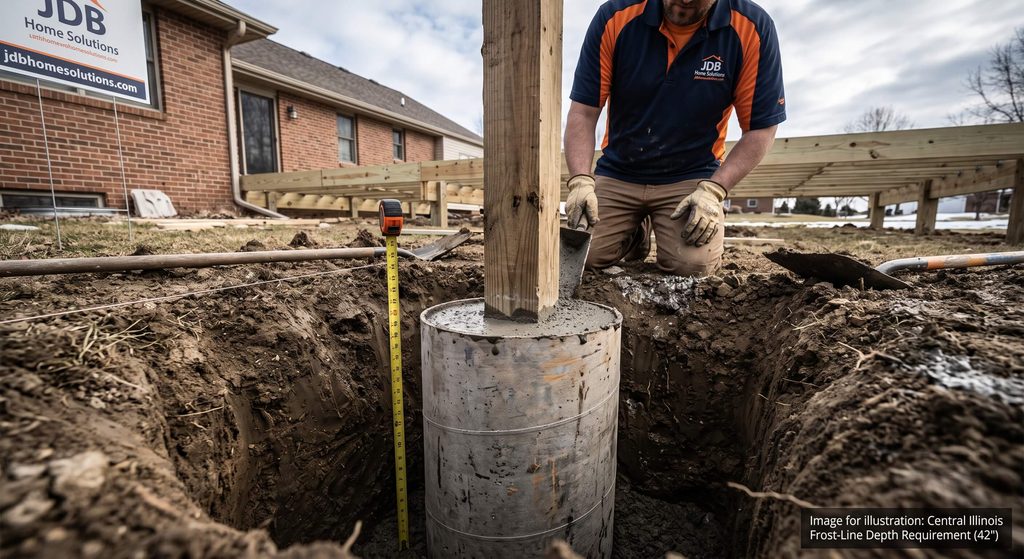
This is the part most generic “how to hire a deck contractor” articles skip entirely, because it’s regional: in Central Illinois, deck footings need to reach a 42-inch frost line. Dig shallower than that, and the ground underneath your footings freezes and thaws every winter — which means the footings themselves shift, a little at a time, year after year.
A deck built on a footing that’s too shallow won’t fail the first winter. It’ll fail the third or fourth, after the movement has finally worked a post loose or cracked a footing — the difference between building on a foundation that holds and one that moves under you a little more each year.
Any contractor who’s actually pulling permits locally should bring this up without you having to ask. If a quote doesn’t mention footing depth at all, that’s worth a direct question before you sign anything.
Wood or Composite: A Full Comparison
Both materials show up constantly in local search demand, and the right answer depends on how hands-on you want to be with upkeep and what you’d rather spend money on up front versus over time:
| Pressure-treated wood | Composite (Trex / TimberTech) | |
|---|---|---|
| Upfront cost | Generally lower | Generally higher |
| Maintenance | Needs periodic staining/sealing | Minimal — no staining |
| Warranty | Varies by lumber supplier | Manufacturer fade-and-stain warranties (JDB installs decking carrying a 25-year fade-and-stain warranty) |
| Feel underfoot | Classic, natural, warms in direct sun | Consistent color, resists splintering |
| Typical lifespan with upkeep | Long-lasting if resealed on schedule | Long-lasting with minimal intervention |
Neither is objectively “better” — it’s a real tradeoff between upfront cost and long-term upkeep. A good contractor should walk you through both instead of pushing whichever one they’d rather install. Deck projects also tend to hold their value well: national renovation studies commonly put deck additions among the higher-ROI exterior projects at resale, and JDB’s own completed deck projects have averaged around an 85% return on investment at resale.
Red Flags When Comparing Deck Quotes
A few warning signs are worth taking seriously before you sign anything:
- A verbal number with no written breakdown. If it’s not written down, it’s not a real quote.
- No mention of permits or footing depth. Either they’re not handling it, or they haven’t thought about it — neither is good.
- Pressure to sign the same day for a “discount.” A legitimate contractor’s price shouldn’t depend on how fast you decide.
- Can’t or won’t show proof of license and insurance. This protects you if something goes wrong mid-project.
- A quote dramatically lower than every other one you got. It’s usually missing scope, not a better deal.
A Simple Way to Compare Two Deck Quotes Side by Side
When you’ve got two or three quotes in hand, it’s easy for the lowest number to win by default just because it’s the easiest thing to compare. Line them up against the same checklist instead:
| What to check | Why it matters |
|---|---|
| Written, itemized estimate | Protects you from surprise change orders mid-project |
| License and insurance shown, not just claimed | Covers you if something goes wrong on your property |
| Who pulls the permit | Determines whether footings actually get inspected |
| Footing depth stated | The difference between a deck that holds and one that shifts over winters |
| Warranty terms in writing | A verbal “don’t worry about it” isn’t enforceable later |
| Realistic day-count for the build | A vague timeline usually means a vague plan |
A quote that’s missing two or three of these isn’t necessarily a bad contractor — but it’s an incomplete quote, and it’s worth asking for the missing pieces in writing before comparing it on price alone.
Common Questions About Finding Deck Contractors Near You
How do I find deck contractors near me with good reviews?
Start with Google’s local results and read a handful of the actual review text, not just the star average — look for mentions of responsiveness, cleanup, and whether the same person who quoted the job showed up to build it.
Do deck contractors near me offer free estimates?
Most local deck contractors, including JDB, offer a free on-site estimate as standard practice. Be wary of anyone who wants to charge just to come look at the site and give you a number.
What’s the difference between a deck builder and a general contractor?
A dedicated deck builder specializes specifically in decks, footings, and outdoor structures, while a general contractor may subcontract that work out. Neither is automatically better, but it’s worth asking directly who’s actually doing the carpentry.
What Working With a Local Deck Builder Actually Looks Like
One Springfield homeowner put it simply after a same-day call: “Called James first thing this morning…He didn’t hesitate — worked me into his already busy schedule.” That’s the practical test of a local contractor versus a bigger outfit: whether the person who answers the phone can actually do something about your timeline, or just passes you to a scheduling queue.
Another repeat customer summed up the longer-term relationship: “I have been using their services for years, and they consistently deliver top-tier results.” That kind of repeat business is a reasonable proxy for how a company treats customers after the invoice is paid, not just before.
Caring for Your New Deck Year-Round
Whichever material you choose, a little seasonal attention keeps a deck from turning into a problem:
- Pressure-treated wood typically needs restaining or resealing every 1–3 years, depending on sun and weather exposure — more often on south-facing decks that take direct sun most of the day.
- Composite decking mainly needs periodic washing to keep dirt and mildew from building up in the grain texture — no staining required, per the manufacturer warranties covering fade and stain resistance.
- Keep gutters and downspouts diverted away from footings. Water pooling near a footing works against the same frost-line protection discussed above.
- Do a spring check after freeze-thaw season. Look for loose fasteners, movement at the ledger board, or any new gaps at the footings — catching movement early is far cheaper than a mid-season repair.
Why Springfield Homeowners Choose JDB Home Solutions
JDB Home Solutions has built 100+ decks across Springfield and Central Illinois over 20+ years in the trade — and James, the owner, has personally been on site for every single one of them. There’s no call center and no subcontracted sales team; the person who does your free on-site estimate is the same person who shows up to build it.
JDB carries a 5.0-star average Google rating, and the process is the same every time: a free on-site estimate with a real written quote, design and city permitting, a 3-7 day build with daily cleanup, and a final walkthrough with your warranty documentation in hand. You can see recent project types and get a free estimate on JDB’s deck-building page for Springfield, IL.
Getting Started
The fastest way to compare deck contractors near you honestly is to get a real, itemized estimate from each one you’re considering — not just a phone quote. Ask about footing depth, permits, and warranty terms up front, and use the checklist above to keep the comparison fair.
If you’re in Springfield or Central Illinois, JDB’s free on-site deck estimate comes with a written quote, no pressure, and a response from James within 24 hours.